The role of time in ecology has a long history of investigation, but ecologists have largely restricted their attention to the influence of concurrent abiotic conditions on rates and magnitudes of important ecological processes. Recently, however, ecologists have...
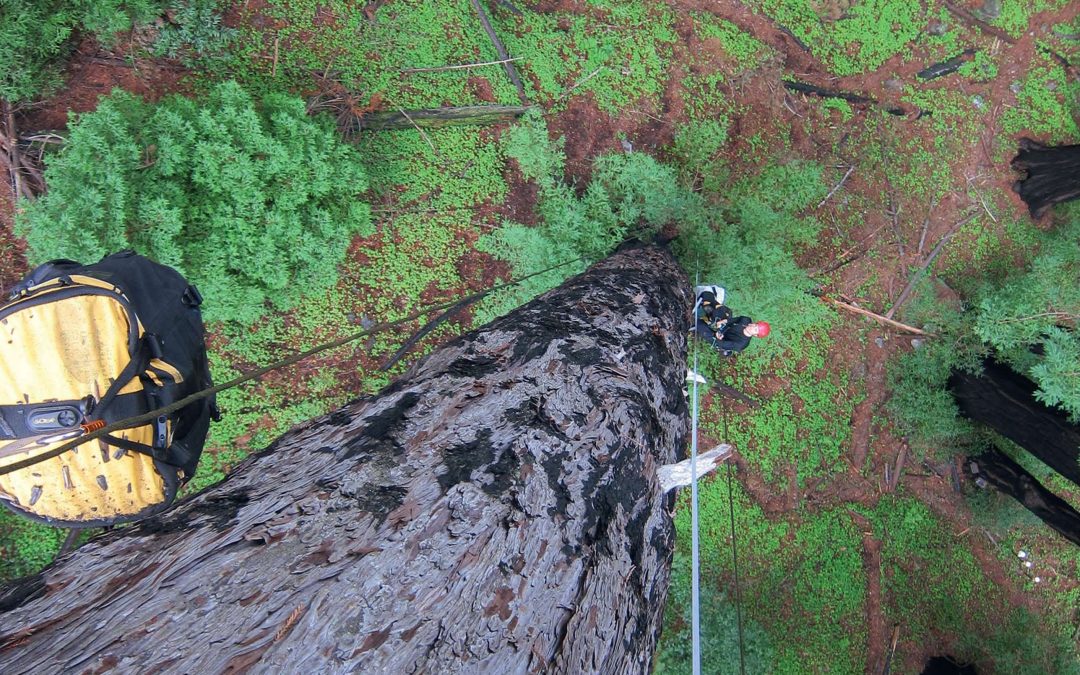
Ready to climb a California coast redwood (Sequoia sempervirens), to sample branches for fungi. In this issue, Harrison et al. delved into a largely unexplored reservoir of fungal diversity—the forest canopy—using a high-throughput sequence-based approach to...
The Arctic continues to warm at a rate that is currently twice as fast as the global average (see essay on Surface Air Temperature). Warming is causing normally frozen ground (permafrost) to thaw, exposing significant quantities of organic soil carbon to decomposition...
Understanding the global carbon (C) cycle is of crucial importance to map current and future climate dynamics relative to global environmental change. A full characterization of C cycling requires detailed information on spatiotemporal patterns of surface-atmosphere...
Spatio-temporal fields of land–atmosphere fluxes derived from data-driven models can complement simulations by process-based land surface models. While a number of strategies for empirical models with eddy-covariance flux data have been applied, a systematic...