

COMMUNITY, CULTURE & THE ENVIRONMENT
The McAllister Program · housed with Ecoss · Northern Arizona University“Enable the arts, cultural, scientific, and environmental institutions of the Colorado Plateau to meet the long-term needs of the communities they serve.”
Mission of the McAllister Program (CC&E)
The McAllister Program in Community, Culture, and the Environment is housed in partnership with the Center for Ecosystem Science and Society (Ecoss), and enables Ecoss to better and more imaginatively serve communities of the region.
Science and climate, in conversation with the community
Through this partnership, Ecoss seeks opportunities to communicate about science and climate-based concerns with frontline communities and diverse stakeholders. We also work to expand the spaces in and beyond the university that make such conversations both possible and productive. As stewards of the program, Ecoss aims to:
Open the conversation
Foster new and inclusive conversations about ecology and climate action, aiming especially to include and amplify voices historically excluded from these conversations.
Build bridges
Strengthen bridges between NAU and its neighbor communities, and build new ones that will allow us to collaboratively address environmental questions and challenges.
Art, climate & science
Imagine and develop cultural opportunities that illumine the intersections of art, climate, and science, and extend their luminance and lasting power beyond the campus community.
Support inquiry
Support work that serves communities in and around NAU engaged in a spirit of inquiry around climate change, environmental science, and associated cultural questions and challenges.
Climate Education, Engagement and Design Fellowships
The McAllister Program’s call for Climate Education, Engagement and Design (CEED) fellows is available to read in full.
Scientists in the Classroom
During the 2016–2017 academic year, Ecoss teamed up with STEM City to serve as a Flagstaff community STEM partner in the Scientists in the Classroom Program. Each month, Ecoss students, postdocs, faculty, and staff visited Ms. Kathryn Wertz’s 6th grade science class at Sinagua Middle School to share their experiences as professional scientists.
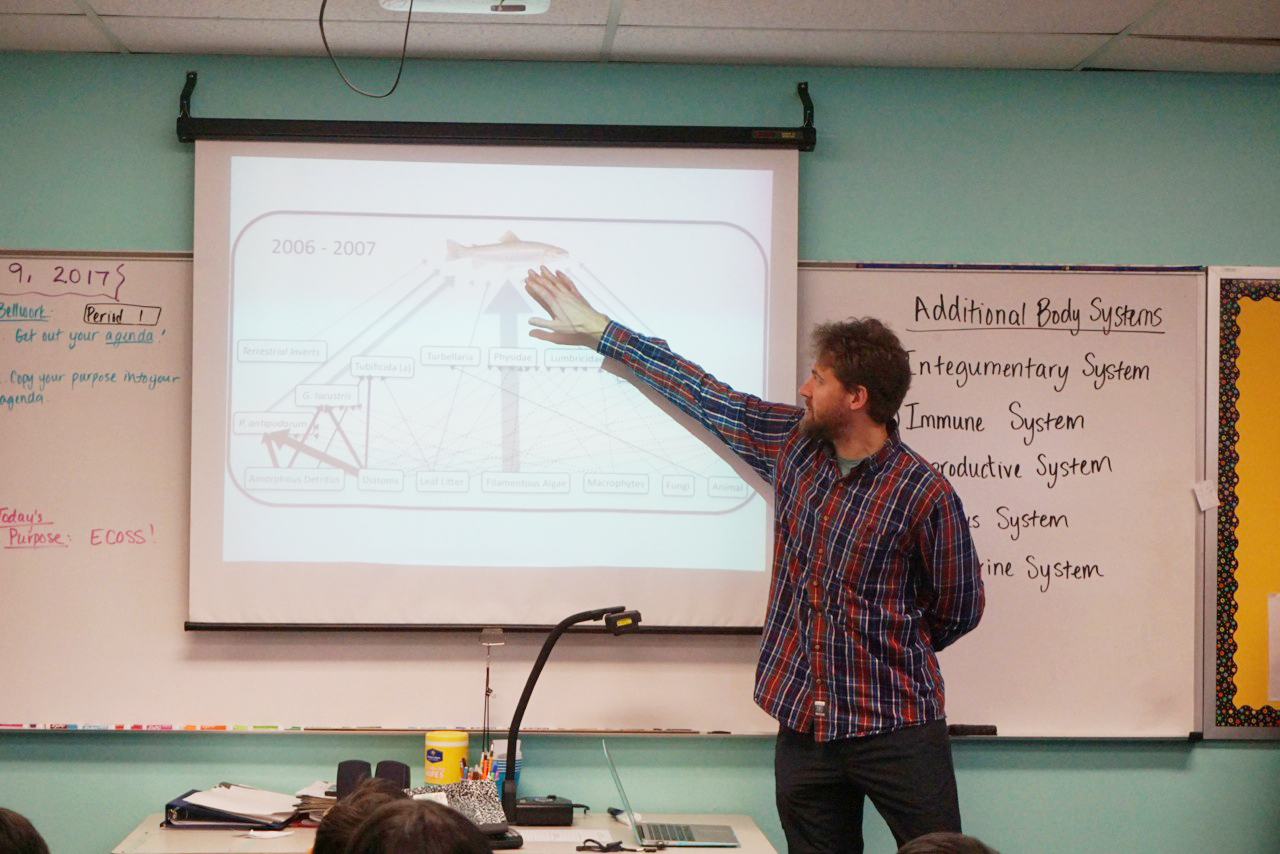
Activities included a field experiment on decomposition, discussing the ecosystem services of soils, measuring photosynthesis, and learning about freshwater food webs. More than 20 Ecoss members took part.
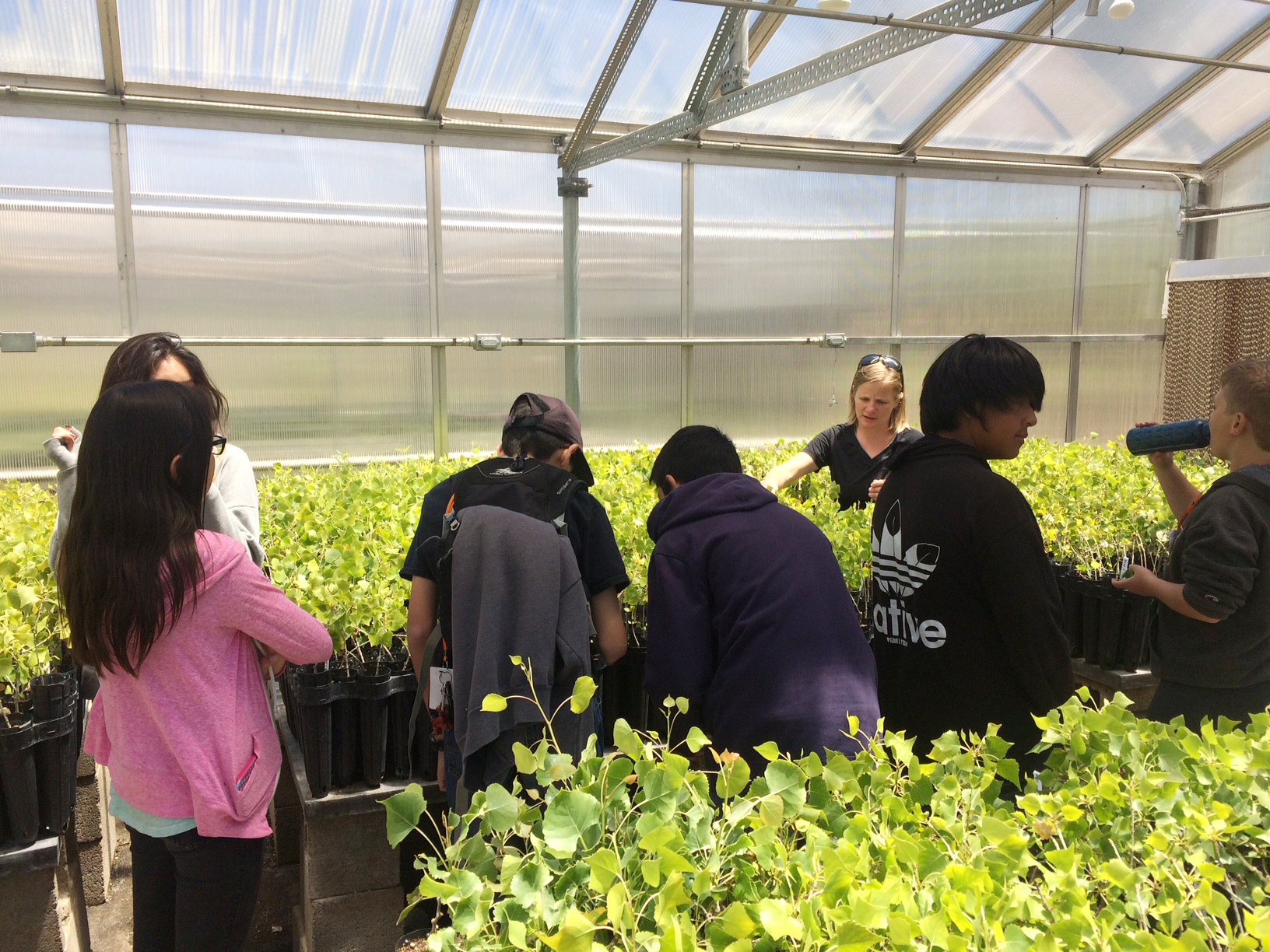
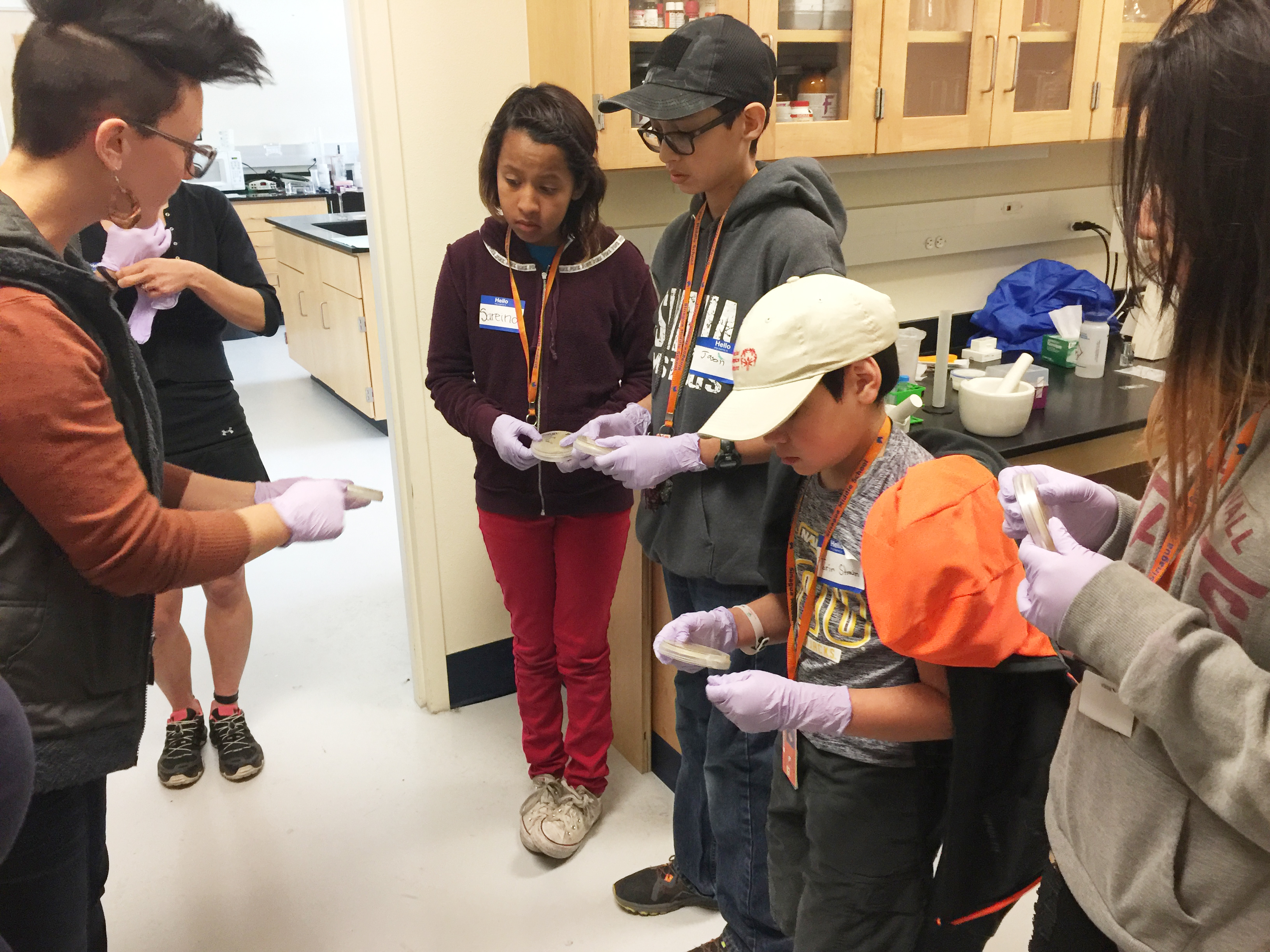
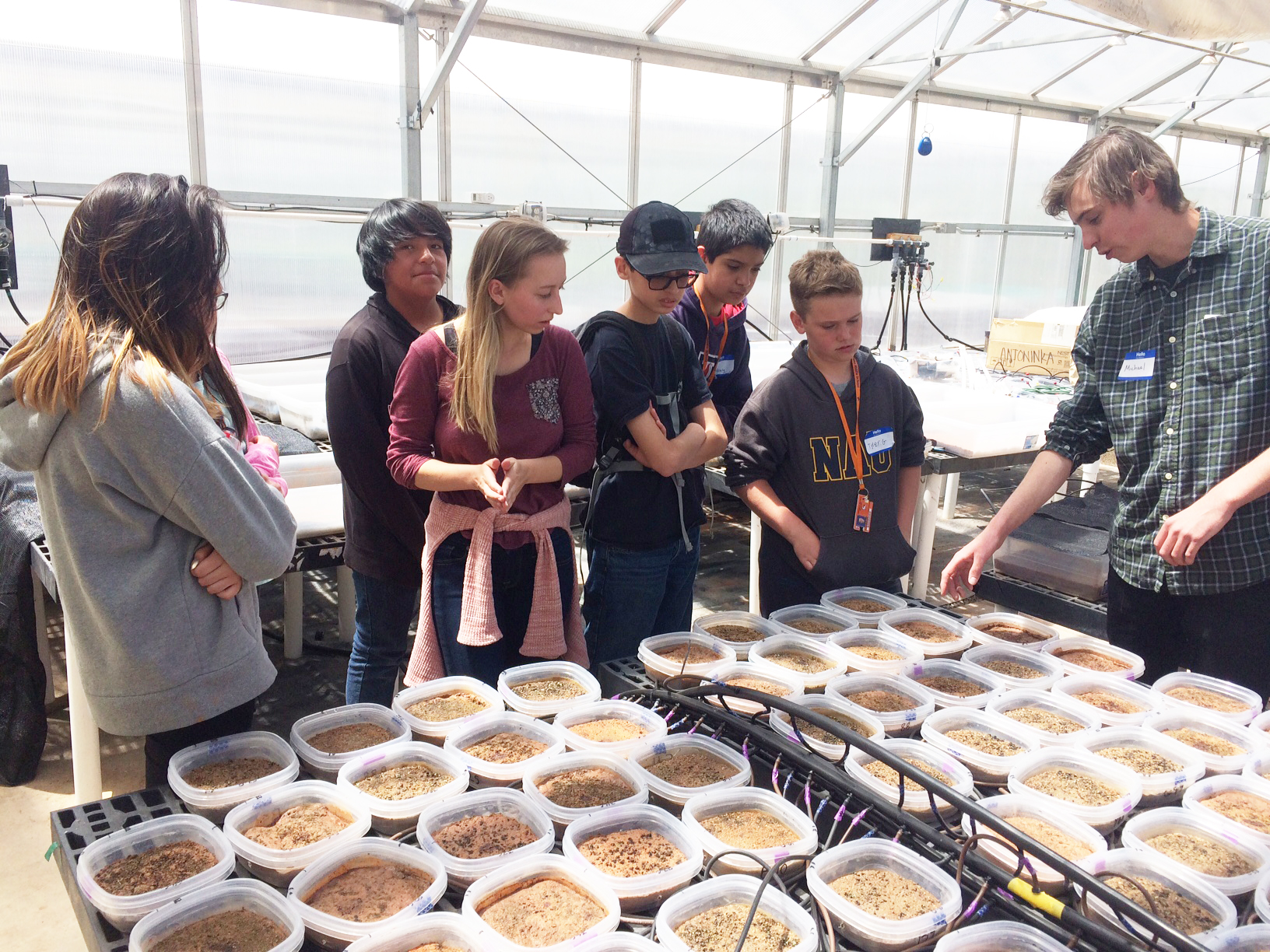
The year closed with a field day at the Ecoss laboratories and the South Campus greenhouse. Twelve Ecoss scientists led five groups: microbial ecology; carbon cycling, climate change and the greenhouse effect; freshwater ecology (fish painting, bugs and scopes); fun with liquid nitrogen; and weighing the leaves from the students’ decomposition experiment. The students extracted DNA from fruit, made ice cream with liquid nitrogen, and learned about restoration projects and research on local ecosystems.
Decomposition
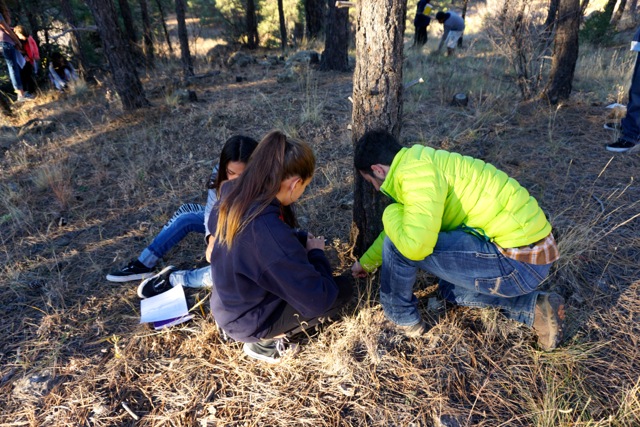
The students deployed 1.0 g of either cottonwood leaves or ponderosa needles in fine- and coarse-mesh litter bags for five months on the forest floor near their school. After the winter, they collected the bags and weighed the leaves, and we plotted the data — which nicely showed that different leaf-litter quality translates directly to different decomposition rates.
Freshwater
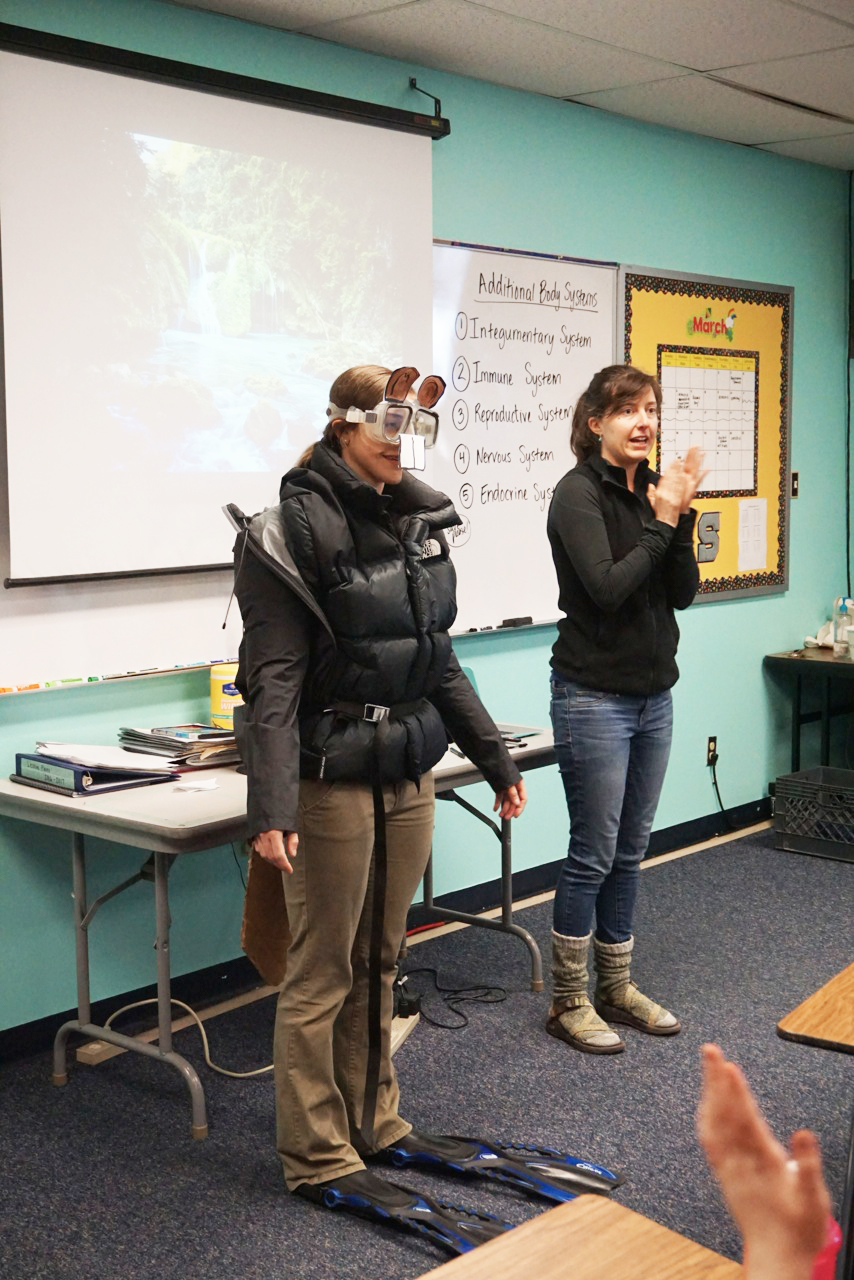
On freshwater day the students ‘dove’ into the threats facing freshwater ecosystems. We built a freshwater food web and discussed ecosystem engineers in the form of beavers — which brought down the house, because we dressed their teacher up as a beaver while the students talked about adaptations.
Flagstaff STEM Celebration
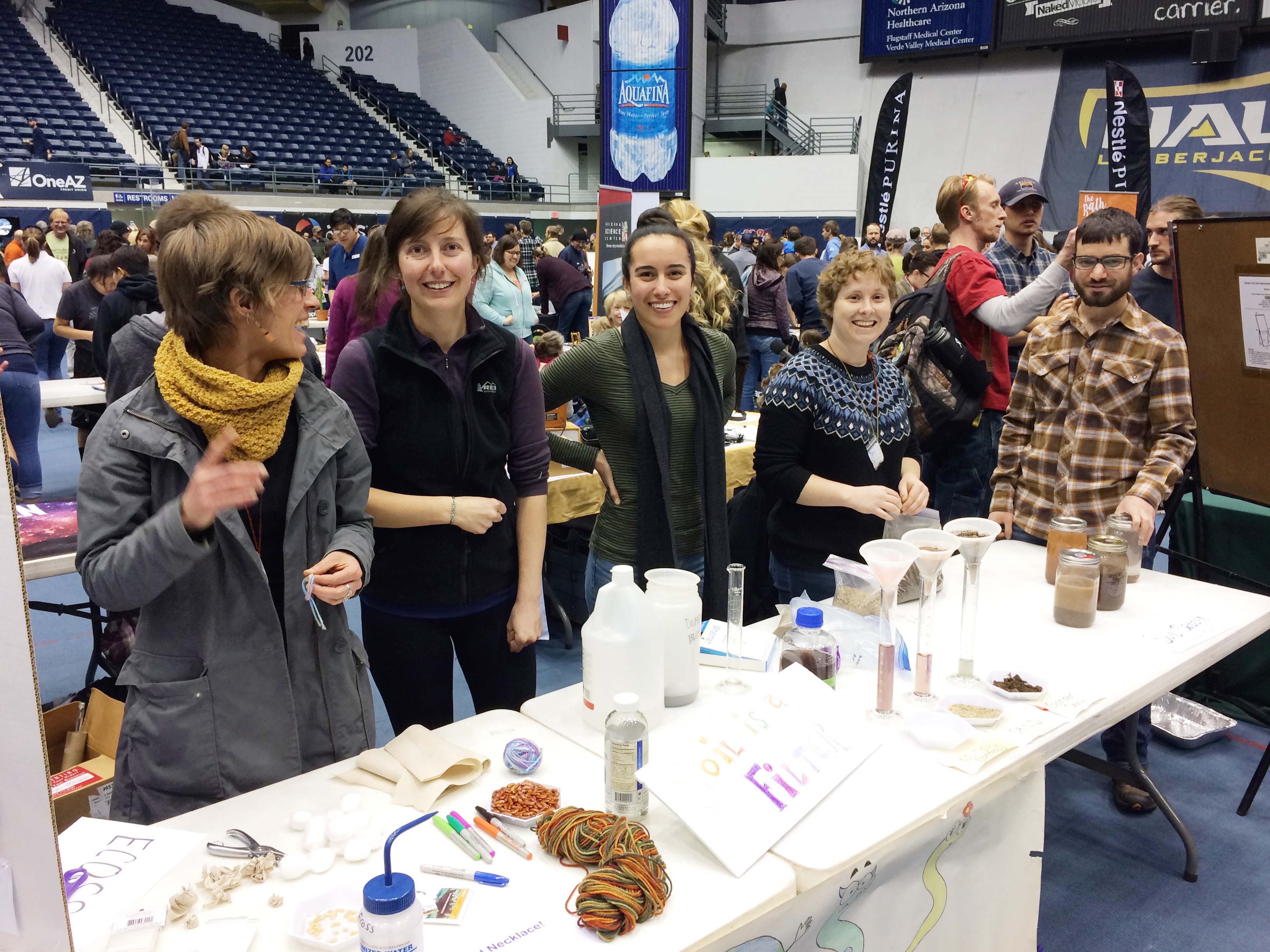
Ecoss hosted a table at the 4th Annual Flagstaff STEM Celebration. Activities included ‘Soil as a Filter’, showing how different soil types remove particles from water; ‘Shake-em-up soil jars’, showing how soil particles in streams settle at different rates; ‘Sprout your own necklace’; and ‘Eco-Trivia’.
Skype a Scientist
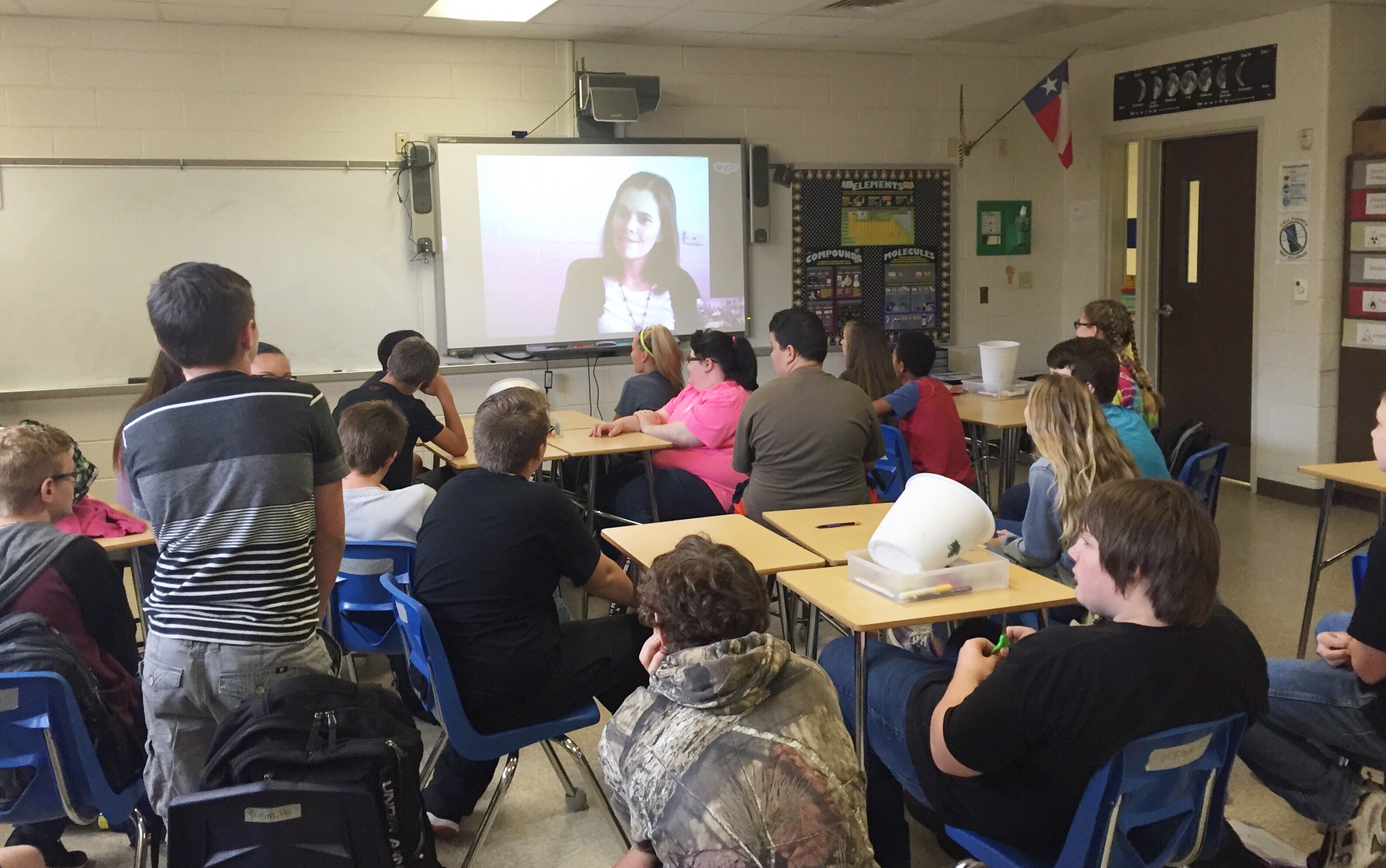
Skype a Scientist pairs scientists with classrooms around the country, giving students the chance to ask a scientist about science, about what it is like to be a scientist, and anything else they are curious about. Christina Schädel was matched with a class at Brookeland ISD Junior High in Texas, and worked with science teacher Kristin McClain to prepare the students for a question-and-answer session. On the call, the students asked about climate change in the Arctic and what they can do in Texas to help reduce carbon emissions.
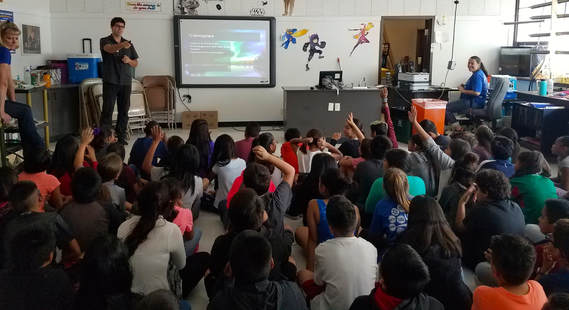
5th graders tackle climate change
The fifth graders at W.F. Killip Elementary are learning how the Earth’s systems — hydrosphere, biosphere, atmosphere and geosphere — interact, and will use that knowledge to develop local Flagstaff solutions to the effects of a warming climate. Ecoss member Anthony John (AJ) Garnello, a doctoral candidate at Northern Arizona University, was part of a group of scientists who visited the Killip STEM Lab on September 8th as part of Flagstaff STEM City.
