COMMUNITY, CULTURE & THE ENVIRONMENT The McAllister Program · housed with Ecoss · Northern Arizona University “Enable the arts, cultural, scientific, and environmental institutions of the Colorado Plateau to meet the long-term needs of the communities they serve.”...
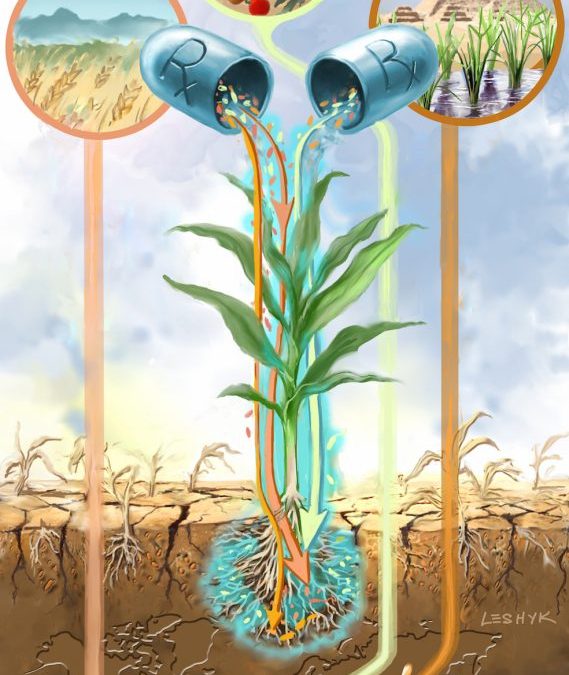
ECOSS researchers recently published findings in the scientific journal Plant and Soil showing that rhizosphere bacteria could help reduce crop losses due to drought. See the full article Listen to an interview by Knau with Rachel Rubin Watch an interview with Rachel...
Dams impound the majority of rivers and provide important societal benefits, especially daily water releases that enable on-peak hydroelectricity generation. Such “hydropeaking” is common worldwide, but its downstream impacts remain unclear. We evaluated the response...
Human impacts on biogeochemical cycles are evident around the world, from changes to forest structure and function due to atmospheric deposition, to eutrophication of surface waters from agricultural effluent, and increasing concentrations of carbon dioxide (CO2) in...
In sagebrush steppe, snowpack may govern soil respiration through its effect on multiple abiotic and biotic factors. Across the Intermountain West of the United States, snowpack has been declining for decades and is projected to decline further over the next century,...